Understanding IGF: A Crucial Platform
The IGF provides a unique forum for addressing pressing digital challenges, emphasizing inclusivity and collaboration. While it doesn’t result in binding agreements, the event inspires stakeholders to take informed actions in their respective domains. Kyoto’s gathering spotlighted AI and emerging technologies, offering a stage to rethink policies and ethics around artificial intelligence. This context framed GAIA’s session, which emphasized fostering a compassionate approach to AI development.
The Session: Impact the Future – Compassion AI
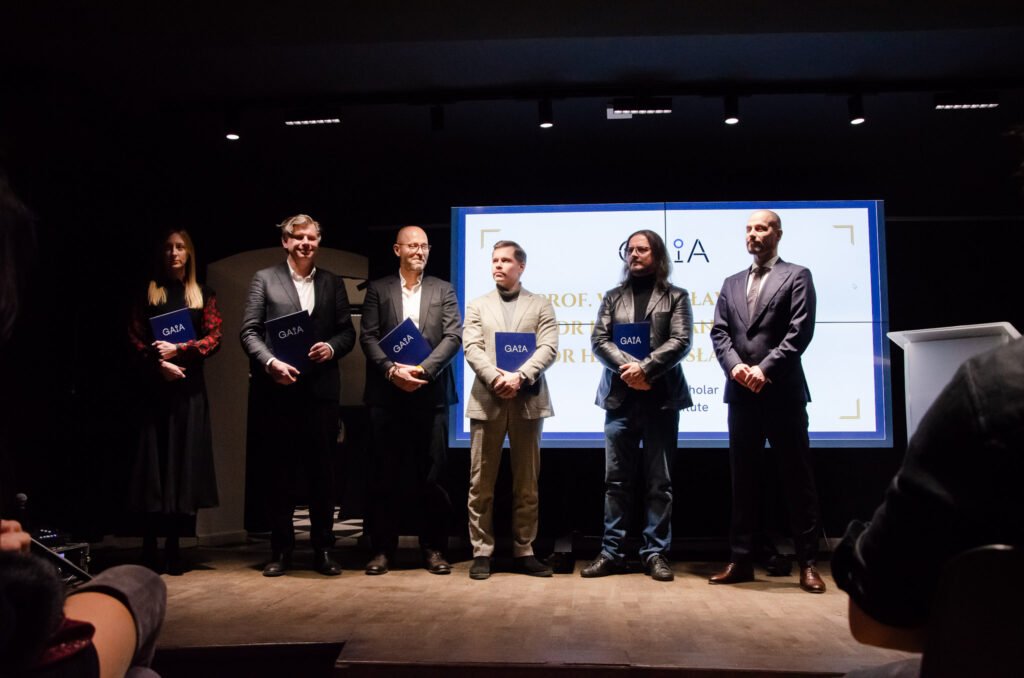
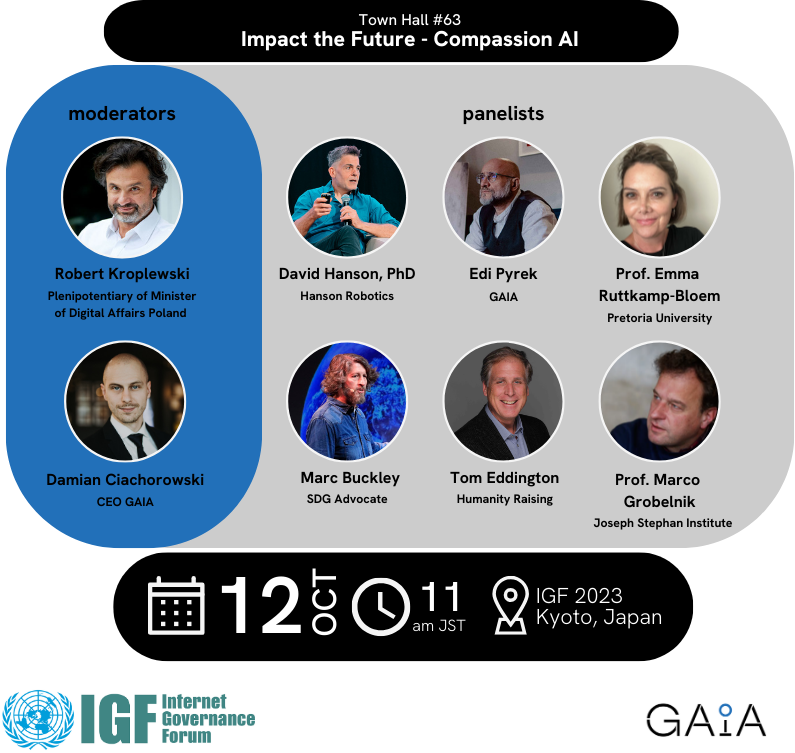
GAIA’s Town Hall session explored the concept of “Compassion AI” as an approach to integrate human empathy and ethical values into the lifecycle of artificial intelligence. Moderated by Robert Kroplewski, a prominent voice in AI policy, the session convened experts from diverse disciplines, including David Hanson (Hanson Robotics), Emma Ruttkamp-Bloem (UNESCO), Edward Pyrek (GAIA Guardians), Marc Buckley (SDG advocate), Tom Eddington (sustainable business expert), and Marco Grobelnik (AI scientist).
David Hanson, PhD: Bio-Inspired AI and Compassion
David Hanson, PhD opened with a profound exploration of AI’s potential to mimic and enhance human empathy. Drawing on the advancements of Hanson Robotics, he highlighted the role of bio-inspired AI in fostering compassionate interactions. He presented examples like humanoid robots designed to interact empathetically with humans, suggesting that AI could one day exhibit sentience deserving of ethical respect. Hanson emphasized the need for AI to go beyond problem-solving, advocating for technologies that prioritize human caring, sustainability, and the well-being of future generations.
Key Takeaway: Compassion in AI is not just a design goal but a cornerstone for building technologies that align with humanity’s collective good.
Prof. Emma Ruttkamp-Bloem: Ethical AI through UNESCO Recommendations
Representing UNESCO, Prof. Emma Ruttkamp-Bloem detailed the organization’s global guidelines on AI ethics. She emphasized the dual nature of AI as both a transformative opportunity and a potential threat. Her presentation introduced the concept of compassionate AI, which aligns with the capability approach—emphasizing ethical entitlements that foster human flourishing. She also advocated revising the Sustainable Development Goals (SDGs) to integrate technological and ethical dimensions, creating a resilient society.
Key Takeaway: AI ethics must evolve as a dynamic mediator between humanity and technology, translating values like inclusion, gender equality, and environmental protection into actionable frameworks.
Edi Pyrek: Building Decentralized, Compassionate AI
Edi Pyrek, founder of the GAIA Guardians platform, spoke passionately about the critical juncture humanity faces in AI development. He criticized the historical mistakes of the internet’s inception and warned against repeating them in AI’s evolution. Highlighting cultural and religious diversities, he proposed compassion as a universal principle. Pyrek introduced Virtual Florence, a collaborative initiative to teach compassion to humans and AI, and previewed the AI Impact Summit in Salzburg, aimed at driving tangible outcomes.
Key Takeaway: A decentralized, compassion-based AI ecosystem is essential for fostering equity, reducing fear, and ensuring responsible technological progress.
Marc Buckley: AI’s Role in a New Ecological Era
Marc Buckley contextualized AI’s development within the Anthropocene epoch, suggesting a transition to a new era guided by ethics, compassion, and global collaboration. He highlighted the SDGs as an unprecedented framework for uniting humanity but noted challenges in leveraging AI to mediate between diverse perspectives. Buckley called for significant financial investment in ecological economic models driven by AI and stressed the urgency of aligning technological advancements with sustainability goals.
Key Takeaway: AI must serve as a unifying force, accelerating progress towards the SDGs while adhering to ethical and ecological imperatives.
Tom Eddington: Responsible Business and AI Ethics
Tom Eddington drew parallels between AI development and Prometheus bringing fire to humanity—an act of both enlightenment and risk. He critiqued the commercialization focus of AI industries, emphasizing the need for ethical frameworks like an AI charter to guide business models. Using examples from public health and cybersecurity, he advocated for foresight and self-discipline in managing AI’s transformative potential.
Key Takeaway: Ethical business practices and guiding frameworks are crucial for ensuring AI technologies benefit humanity without exacerbating inequalities.
Prof. Marco Grobelnik: Balancing Progress with Regulation
Prof. Marco Grobelnik reflected on the challenges of regulating AI amid rapid advancements, particularly since the “ChatGPT moment” of 2022. He discussed the competitive landscape of big tech and geopolitics, stressing the need for a philosophical approach to AI development. Grobelnik expressed optimism about AI’s ability to foster compassionate interactions but warned against losing sight of societal values in the race for innovation.
Key Takeaway: Compassionate AI requires balancing technological advancements with ethical considerations, ensuring AI contributes positively to society.
Open Discussion and Audience Interaction
The open session sparked a lively discussion among panelists and audience members, addressing key ethical and societal challenges in AI development. Participants posed thought-provoking questions, such as the ethical boundaries of compassion in AI and the influence of developers’ personal values on the technology. David Hanson and Edi Pyrek emphasized the need for ethical frameworks and a paradigm shift where compassion becomes a core principle throughout AI’s lifecycle. Questions about including children’s perspectives and tackling corporate short-termism were met with calls for stronger guardianship systems and more sustainable business practices, as highlighted by Robert Kroplewski.
The session concluded on a note of cautious optimism, with both panelists and audience members advocating for AI as a tool to foster deeper human connections and societal progress. The rich dialogue underscored the importance of diverse voices and interdisciplinary collaboration in shaping compassionate and ethical AI, reinforcing the transformative potential of such technologies when developed with intentionality and care.
Conclusions and Calls to Action
The session culminated in a shared vision for AI as a force for global good, highlighting key recommendations for its ethical development. Revising the SDG Agenda emerged as a priority, with a call to integrate UNESCO’s AI ethics recommendations and focus on building resilience and societal well-being. Another critical point was the importance of fostering decentralized AI through initiatives like GAIA Guardians, which aim to ensure equity and compassion in AI development. Finally, the session underscored the need for multidisciplinary collaboration, advocating for stronger connections between academia, industry, and policy to transform ethical principles into actionable outcomes.
A Step Towards a Compassionate Future
GAIA’s participation in IGF 2023 underscored the importance of integrating ethical principles into AI’s rapid evolution. The Town Hall session not only sparked meaningful dialogue but also charted actionable pathways for ensuring AI serves humanity responsibly and compassionately. By championing initiatives like Compassion AI and fostering global collaboration, GAIA reaffirmed its commitment to shaping a digital future that prioritizes empathy, equity, and sustainability.